Partner content in association with
Beyond the ‘China nexus,’ why Southeast Asia’s regional champions are turning to Hong Kong listings


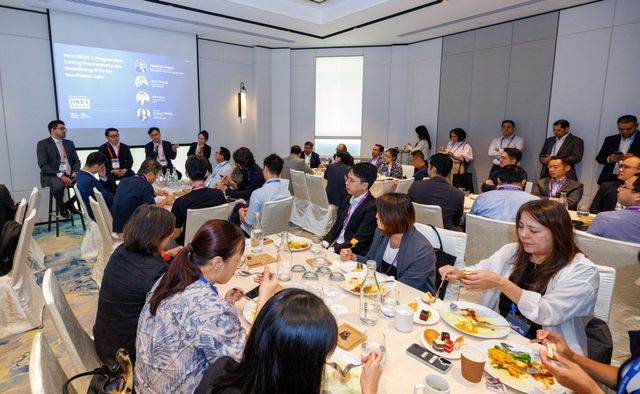
Abhishek Bakshi, Head of ASEAN Issuer Services, Hong Kong Exchanges and Clearing Limited (HKEX); Dan Chong, Managing Partner, Gobi Partners; Eudora Wang, Deputy Editor, Greater China, DealStreetAsia (Moderator)
As capital markets across Southeast Asia grapple with fragmented liquidity and exit overhangs, high-growth companies and investors are re-evaluating their public market strategies, with Hong Kong rising to be a complementary venue for regional champions.
For years, a prevailing assumption among Southeast Asian founders and investors is that they need a “China angle” to get through the door. However, exchange operators and private market investors argued that this mindset is not only outdated, but also costing many regional champions access to deeper liquidity precisely at a time when Hong Kong’s IPO market experiences a powerful growth momentum.
With over HK$388 billion ($49.4 billion) raised across 118 new listings in the first nine months of 2026, Hong Kong stands as one of the world’s deepest liquidity pools.
As its IPO market is on track to rank among the global top three this year, a China connection is by no means mandatory for international companies seeking a listing in Hong Kong, speakers noted during a panel discussion sponsored by the Hong Kong Exchanges and Clearing Limited (HKEX) and held as part of DealStreetAsia’s Asia PE-VC Summit 2026 in Singapore.
Market scale, sector benchmarks & business fundamentals over China exposure
The speakers converged on a common framework for evaluating whether Hong Kong is the right listing venue – one that depends far less on China exposure and far more on the company’s own profile. Rather than a China nexus, what matters more for a successful public market debut in Hong Kong is a sizeable regional scale and a relevant sector benchmark.
“The first three factors that I will prioritise are: where is the company present; what is the scale; and whether there is a good benchmark in the market that investors understand,” said Dan Chong, Managing Partner, Gobi Partners. Chong revealed that four of his portfolio companies are currently in the process of going public, with Hong Kong being one of the viable options.
“If a company is operating in a single country, the likelihood that the local market will fit is natural. Going abroad, people may not appreciate it,” Chong explained.

Market scale, as the second key factor, determines visibility, he said. While a Wall Street listing typically requires an issuer to target at least $2 billion, if not more, to capture US investor interest, that threshold is about $500 million in Hong Kong. By contrast, local Southeast Asian exchanges accommodate significantly smaller listing sizes.
The third factor—a relevant sector benchmark—is critical for price discovery. “It’s very difficult to do price discovery if there’s no benchmark,” said Chong. “Besides these, the fundamentals and quality of the portfolio company are still needed.”
His portfolio company Synagistics Limited, a Singapore-based digital commerce solutions provider, marked a standout exit example through Hong Kong at a time when Southeast Asia’s regional funds face persistent challenges in delivering returns.
Synagistics completed a de-SPAC (Special Purpose Acquisition Company) listing in October 2024, Hong Kong’s first, by merging with HK Acquisition Corporation in a deal valued at HK$3.5 billion ($446 million) on a pre-money basis.
The Hong Kong listing saw this Southeast Asian digital commerce player evolve into a bridge connecting Greater China brands looking to scale into Southeast Asia, as well as Southeast Asian enterprises entering the Chinese market.
“The Synagistics exit delivered a strong DPI (Distributed to Paid-In Capital) for a Gobi fund, which alone explained why it was a success from a fund manager’s perspective,” said Chong.
Reflecting on Gobi’s multi-year journey with Synagistics from their initial engagement to a Hong Kong listing, Chong described the process as a “definitely repeatable” playbook for Southeast Asian companies, provided the fundamentals such as market scale, benchmark and company quality are in place.
Re-evaluating a HK listing: market depth & listing frameworks
For founders and investors, the evaluation of potential listing venues also comes down to a direct comparison of market depth, listing frameworks and aftermarket liquidity.
During the first half of 2026, Southeast Asia’s regional IPO market demonstrated resilience, continuing to attract larger-cap public listings despite a moderation in overall IPO volumes. Deloitte data show that regional stock exchanges recorded a total of 47 IPOs in H1, down 11% year-over-year (YoY), but the overall IPO proceeds surged to approximately $3.1 billion.
In comparison, Hong Kong booked the completion of 87 listings in H1, raising a combined HK$210.2 billion ($27.1 billion), according to HKEX data.
Abhishek Bakshi, Head of ASEAN Issuer Services, HKEX, said framed Hong Kong’s role not as a rival to the region’s local exchanges but as a complementary stock market that can “overlay additional fundraising and liquidity demand” on top of what issuers access at home.
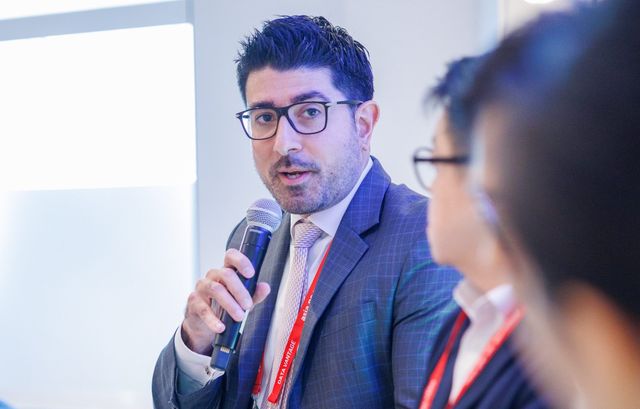
Hong Kong’s IPO activity is “at elevated levels,” said Bakshi, who leads HKEX’s corporate client engagement in Southeast Asia. “The heartening thing from our perspective is that this is translating into ASEAN volumes as well. Since 2025, we’ve had eight international companies, i.e., non-China companies, listed in Hong Kong. Four of those are from the ASEAN region.”
To date, ASEAN issuers have accounted for more than 100 of some 150 international companies currently listed in Hong Kong, including household names like logistics giant J&T Global Express Ltd, Singaporean biotech firm Mirxes Holding Company Limited, Thai coconut water maker IFBH Limited, and more recently, Indonesian pure-play gold producer PT Merdeka Gold Resources Tbk.
Hong Kong’s appeal to international issuers is a result of its years of listing reforms and market-connectivity initiatives, a combination that is fundamental in reshaping the listing calculus for Southeast Asian companies.
Among its specialised listing regimes, Chapter 18A, first introduced in 2018 for pre-revenue and pre-profit biotech companies, has propelled more than 280 healthcare companies to list in Hong Kong, including 90 biotech developers. Chapter 18C, formalised in 2023 for specialist tech companies across sectors like artificial intelligence (AI), robotics, semiconductors and advanced manufacturing, has seen 12 such listings raising about $3 billion in H1 alone.
Chapter 19C, introduced in 2018 and dedicated to overseas issuers, offers a fast-track secondary listing route to Hong Kong for public companies with a primary listing across HKEX’s recognised stock exchanges (RSEs) globally. In the case of Merdeka, an IDX-listed company, it took just six months to complete its secondary listing in Hong Kong from kick-off.
As of today, HKEX’s list of RSEs covers 21 stock exchanges in 19 countries, including Southeast Asia’s local exchanges across Singapore, Indonesia, Thailand and Malaysia.
“These listing reforms are part of an ongoing effort. Some listing enhancements became relevant right away, while others became relevant over time, and we expect this progress to continue moving forward,” said Bakshi. He then pointed to two recent HKEX enhancements, including the implementation of universal confidential filings in July, and the extension of IPO application validity from six to 12 months in August.
The listing pipeline reflects broadening interest from Southeast Asia in Hong Kong’s stock market. The parent company of Philippine fast-food giant Jollibee announced in early September its plan to spin off and list its international operations in Hong Kong instead of New York because of the Asian financial centre’s “market environment and investor relevance.”
Green and Smart Mobility (GSM), a Vietnamese electric vehicle (EV) taxi operator affiliated with Vingroup, is reportedly pursuing a planned 2028 IPO in Hong Kong, for which advisors have suggested a roughly $20-billion valuation. Vietnamese genetic testing startup Gene Solutions is also said to be exploring a Hong Kong IPO as early as the second quarter of 2027 to raise about $100 million.
A good number of Southeast Asian companies have filed their A1 listing applications with HKEX this year, according to Bakshi.
With over 600 active IPO applicants in the pipeline as of early October, Hong Kong is set to deliver its strongest annual fundraising performance on record, with proceeds potentially hitting HK$500 billion ($63.7 billion) this year, according to estimates from KPMG China.
Beyond the gong-ringing: Tapping southbound liquidity
Beyond the gong-ringing ceremony, a perhaps more consequential question facing issuers and investors is what happens next: Can foreign issuers from Southeast Asia or globally maintain aftermarket liquidity in the city?
While international capital frequently anchors IPO order books, the Southbound Stock Connect, a mutual market access programme that allows qualified mainland Chinese investors to trade eligible shares listed in Hong Kong, serves as an increasingly important aftermarket liquidity tool for global issuers.
Comprising well over 20% of Hong Kong’s cash equities turnover, the pool of southbound liquidity is also making its way into Southeast Asian issuers listed in the city, benefitting the likes of Synagistics, J&T Express and Mirxes.
“These companies, upon becoming eligible for Southbound Connect trading, have seen flows anywhere between low single digits to low double digits of their total liquidity,” said Bakshi.
For a Southeast Asian mid-cap company with limited analyst coverage and a thin domestic free float, a low-double-digit shift in the shareholder register represents a meaningful expansion of the shareholder base and can enhance market visibility among a broader group of investors.
While Hong Kong’s stock market is still anchored by international capital, globally diversifying Chinese investors view Southeast Asia through a lens shaped by their own market’s trajectory: booming young population, rapid urbanisation, widespread digital adoption and the region’s painful yet instructive 2022 correction.
By the end of June, the Southbound Stock Connect channel featured a list of 611 Hong Kong-listed stocks, an increase of 47 from one year ago, alongside 31 eligible exchange-traded funds (ETFs), according to HKEX data.
Looking ahead, the perception of a China prerequisite is likely to remain “the elephant in the room,” but it is “more art than science,” said Bakshi. For Southeast Asian and global companies with sector benchmarks and sizeable scale, he said, “people would be surprised at how much more relevant a Hong Kong listing can be than you would think.”