Partner content in association with
Why Southeast Asian firms are choosing HKEX for IPOs

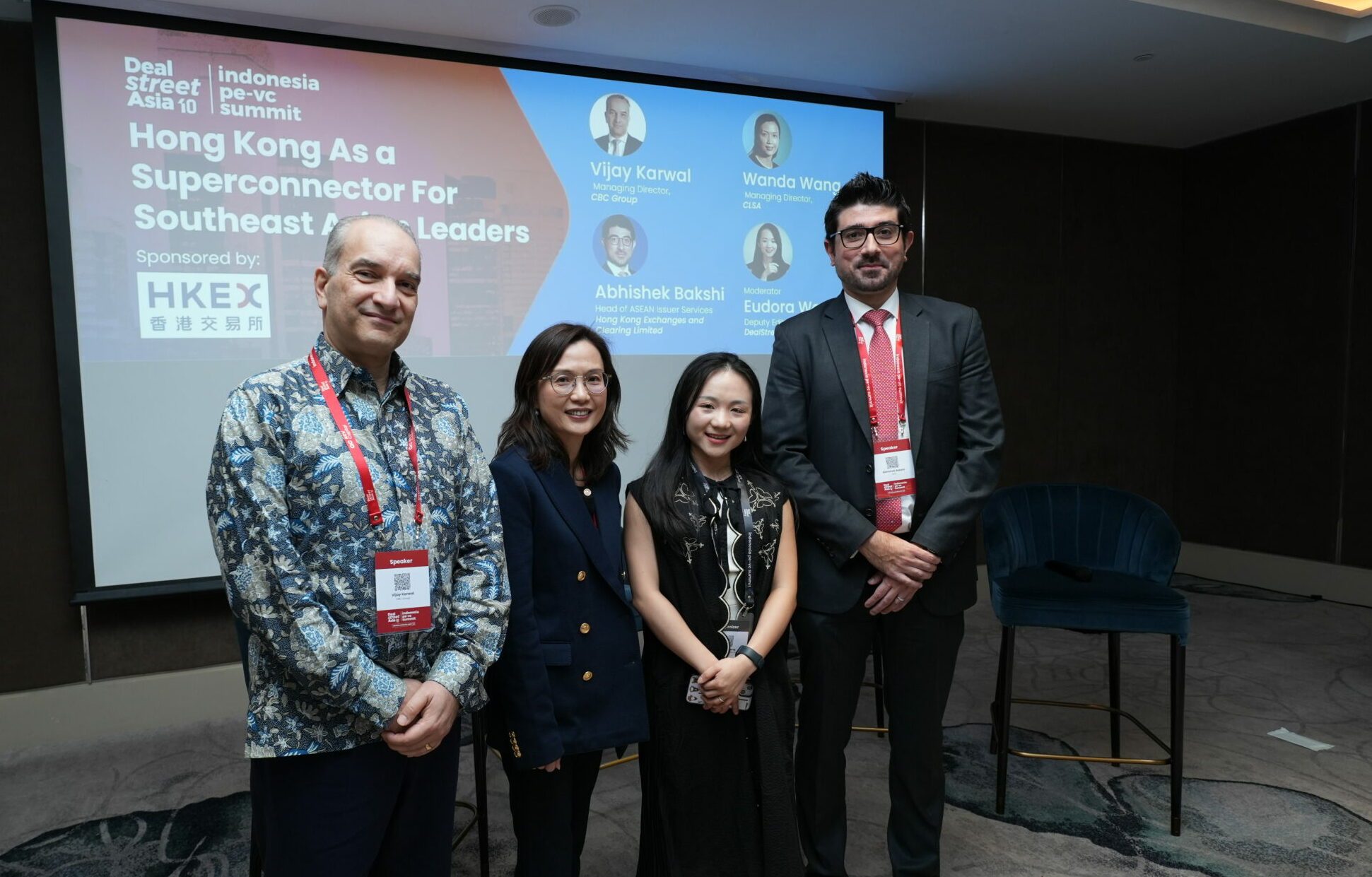
Left to right: Vijay Karwal, Managing Director, CBC Group; Wanda Wang, Managing Director, CLSA; Eudora Wang, Deputy Editor, Greater China, DealStreetAsia [Moderator]; Abhishek Bakshi, Head of ASEAN Issuer Services, HKEX
The scale of Hong Kong Exchanges and Clearing Limited (HKEX) and its strategic position as a gateway to Chinese Mainland investors make the bourse a natural partner for Southeast Asian companies, which is evident from the roster of regional companies that have found public market success there in recent years.
HKEX, the top global IPO venue in 2025 with an average daily turnover of over HK$250 billion ($32 billion), has been attracting interest from companies across the globe that are looking to list, including those in Southeast Asia. This topic was discussed during a breakout panel session at DealStreetAsia’s Indonesia PE-VC Summit 2026 in Jakarta on Jan 29.
One issuer that stands out is J&T Global Express Limited (J&T), which raised approximately HK$3.9 billion ($500 million) in its Hong Kong IPO in 2023, Abhishek Bakshi, head of ASEAN Issuer Services at the bourse, noted during the panel. The logistics company, originating from Indonesia, is now further tapping the city’s deep capital market ecosystem by raising approximately HK$4.7 billion ($596 million) through convertible bonds.
J&T is just one in a long list of companies that have chosen HKEX. Other fairly recent newcomers include Singapore biotech firm Mirxes Holding Company Limited, Indonesian alumina producer Nanshan Aluminium International Holdings Limited and Thai beverage producer IFBH Limited.
Of the 150-plus international companies currently listed on HKEX, two-thirds are from Southeast Asia, said Bakshi.
“We see ourselves as extremely complementary to the ASEAN market. That’s at the core of our regional strategy,” he added.
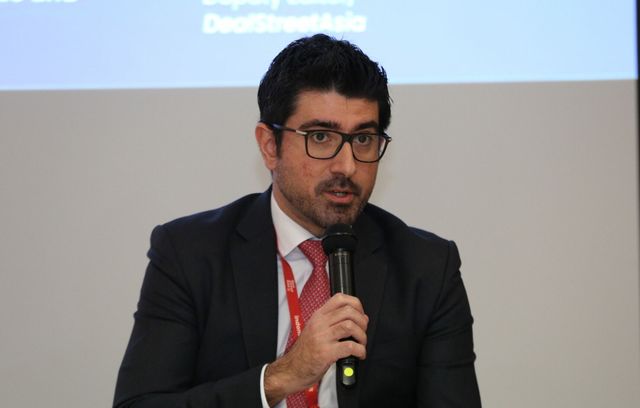
Sector over geography
Bakshi advised that firms should position themselves through a sector-focused narrative rather than a geographic lens to better resonate with HKEX’s broad, international investor base.
He explained that HKEX hosts a healthy mix of issuance from various sectors. The Industrials and New Energy sectors currently dominate, accounting for about 40% of the exchange’s total issuance volume in 2025, while Tech, Media and Telecom (TMT) make up about 20%. Several other sectors, like healthcare, metals and mining, and consumer products, are seeing an even split of around 10-15% each.
“So it’s not so much about Southeast Asia, Europe or the US, but it is about having a business that investors in Hong Kong are familiar with,” Bakshi said.
One of the factors that makes HKEX appealing for companies from diverse sectors is the series of strategic listing reforms that the bourse has rolled out over the past few years, which have lowered barriers, broadened access and provided tailored pathways for new-economy and overseas issuers.
Among the most notable of those are Chapter 18A, which allows pre-revenue Biotech firms to list on the Main Board based on their R&D credentials and expected market capitalisation, and Chapter 18C, which is tailored for high-growth Specialist Technology firms, such as those engaged in AI, advanced hardware, new energy, advanced materials and food-tech sectors.
Beyond sectoral attractions, HKEX has also undertaken initiatives pertaining to structural aspects such as adjusting rules around Weighted Voting Rights (Chapter 8A) and Secondary Listings for Overseas Issuers (Chapter 19C). More recently, it launched the Technology Enterprises Channel (TECH), a dedicated pre‑IPO engagement and guidance channel for Specialist Technology companies (Chapter 18C) and Biotech companies (Chapter 18A) considering a listing in Hong Kong. TECH also gives eligible companies the option of confidential filing, helping to safeguard sensitive R&D and business information ahead of public disclosure.
“Hong Kong is at the forefront of such market enhancements. For example, HKEX introduced new IPO price discovery processes and enhanced open market requirements, providing issuers with more flexibility in using the capital market infrastructure,” Bakshi added.
Connecting with Mainland Chinese investors
Arguably, the biggest appeal for Southeast Asian firms, when it comes to the prospect of listing on HKEX, is the bourse’s cross-border framework that facilitates the flow of capital from the Chinese Mainland.
Chinese Mainland investors represent one of the deepest pools of savings globally, with strong participation from retail traders, mutual funds and insurers. This makes them an important source of capital for issuers, particularly those from markets where liquidity is more limited.
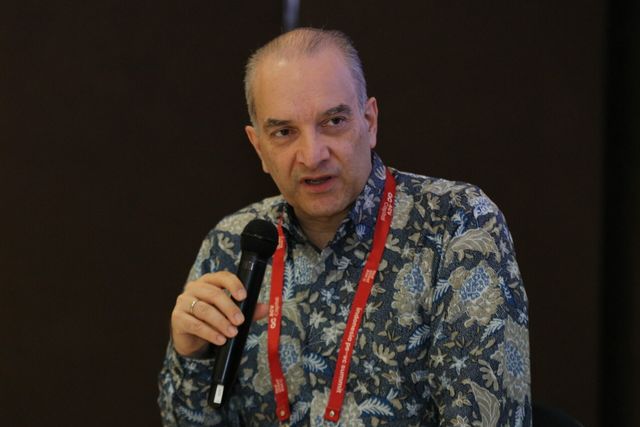
“The one feature of the Hong Kong market that I find Southeast Asian exchanges are most envious of is Stock Connect, the ability to access liquidity and capital from the Chinese Mainland,” said Vijay Karwal, managing director at Singapore-based, healthcare-focused asset management firm CBC Group.
Stock Connect is a market access mechanism that links Chinese Mainland exchanges (Shanghai and Shenzhen) with HKEX and allows eligible investors on each side to trade shares in the other market through their local brokers and clearing systems.
By enabling Chinese Mainland investors to buy eligible Hong Kong-listed shares, issuers stand to benefit from materially improved liquidity, valuation support and investor diversity after listing.
With its various initiatives around listing regime and cross-border access, Hong Kong recently re-emerged as the leading market for global equity offerings. In fact, two of the world’s five biggest IPOs last year were completed in the city, including electric vehicle battery leader CATL, which raised about $4.6 billion, and precious metal miner Zijin Gold International, which secured roughly $3.2 billion.
According to Wanda Wang, Managing Director at securities firm CLSA, the pipeline for HKEX is expected to remain robust. A fresh wave of listings is anticipated from TMT groups, particularly companies linked to AI, alongside continued interest from commodities, metals and consumer retail players, both from within the region and beyond.
“The majority of them are Chinese companies, but we are also seeing [companies from] other parts of the world coming to Hong Kong,” Wang said.