Geopolitical tensions in the Middle East are doing little to derail activity in Asia’s private equity secondary market, with investors and advisors instead preparing for a wave of transactions driven by mounting pressure on funds to return capital.
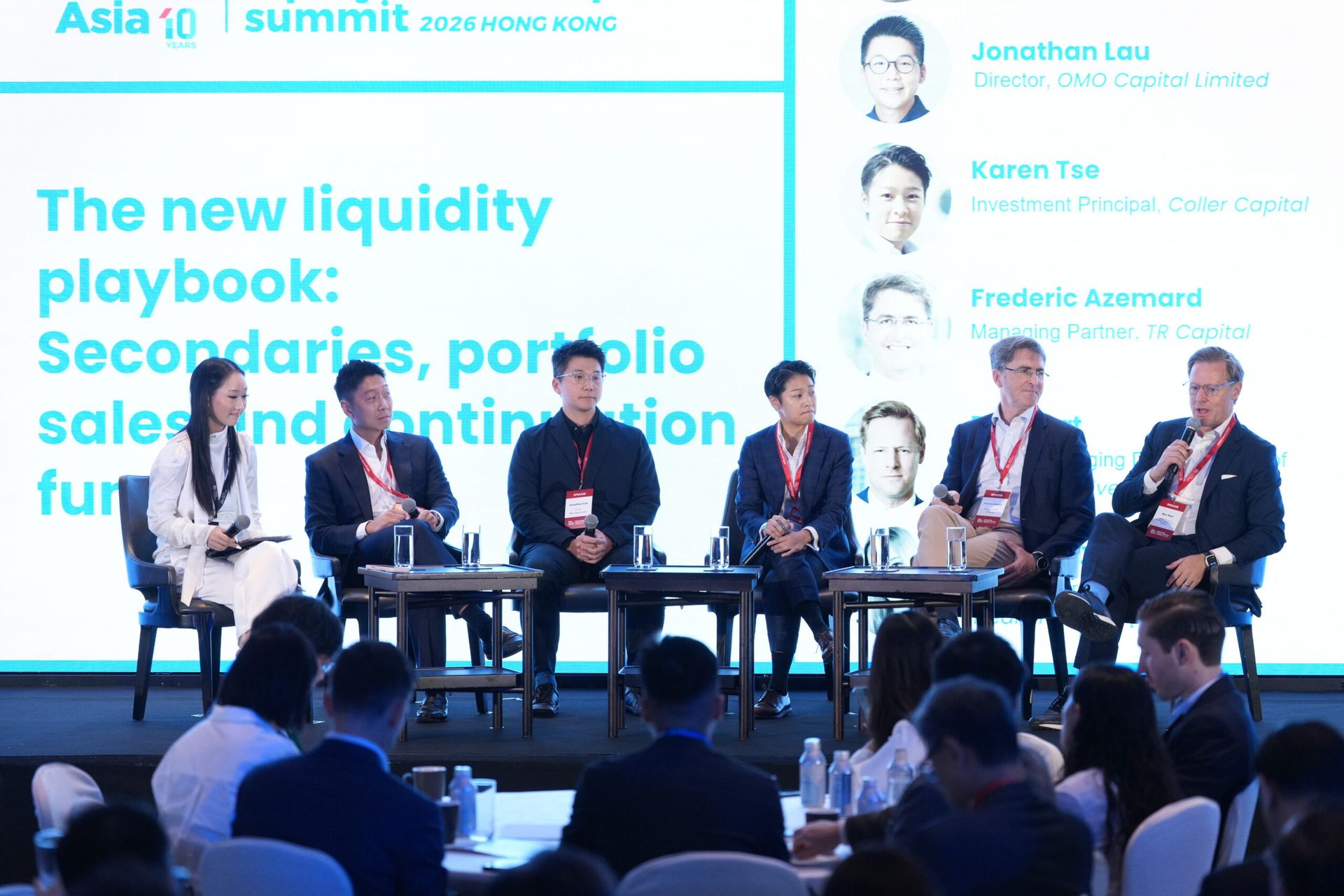
At DealStreetAsia’s inaugural Asia Private Equity Leadership Summit in Hong Kong on Wednesday, secondary experts from Partners Group, Coller Capital, TR Capital, OMO Capital, and Evercore said fund managers and investors remain focused on liquidity needs even as the conflict involving Iran adds another layer of uncertainty to already fragile global financial markets.
“We’ve seen zero let-ups so far,” said Ben Hart, Head of APAC Private Capital Advisory at Evercore. “We’ve had no LP-led processes put on hold as a result of the war there,” he said, pointing out that the group’s advisory business worked on $120 billion worth of transactions globally in 2025, including GP-led secondaries, LP-led secondaries, and structured capital solutions.
The secondary advisor said some investors are instead exploring sale of energy-related assets while commodity prices remain elevated. “There’s a conundrum,” Hart said.
“Investors see war and missiles flying and naturally think maybe they should wait. But if you’re holding energy assets right now, this may actually be the best time to sell from a pricing perspective.”
The logic is that any easing in tensions or reopening of key shipping routes such as the Strait of Hormuz could send prices lower, potentially reducing valuations for energy assets. Still, secondary sale processes typically take several months, leaving deals exposed to rapidly shifting market conditions.
Agreeing with Hart on seller sentiment, another secondary expert said transactions had not been halted to the extent initially feared. “The intention to sell is definitely there,” said Martin Liew, Managing Director, Private Equity, Asia-Pacific, Partners Group. “It’s not people putting deals on hold but more sellers talking about pushing up the sales by a quarter.”
Karen Tse, Investment Principal at Coller Capital, is also seeing a robust pipeline from sellers in the Asia-Pacific region.
“There are a lot of first-time sellers, and that sort of opened the gate for some of the other institutions who have been deploying in the market for quite some years to explore selling in the market as well, ” said Tse.
“There are also some large-scale APAC LPs who haven’t been selling in the market in the last two years.”
Liew said the recent wave of new entrants into the secondaries market is also a positive sign as active portfolio management becomes increasingly mainstream among private capital investors. “You’re going to see other institutions taking encouragement from that.”
A buyer of extremely old fund stakes like Jonathan Lau from OMO Capital is also seeing growing activity from older vintages approaching the end of their fund lives, creating a steady pipeline of tail-end portfolio transactions.
“It’s been incredibly busy, just the cliff of funds coming to 15-20 years that continues to grow every single day,” Lau said. “We continue to see a lot of deal flow from people cleaning up. There are many first-time sellers, and the second and third time they sell, they trim off things they don’t care about that much.”
For GP-led deals, Tse said public market sentiment will also play a key role in shaping deal activity. “Depending on the market environment, a lot of it is driven by sentiment in the public markets as well,” he added. “I do expect more GP-led transactions to come into the market on the back of that.”
Investors are already seeing growing interest from general partners managing older vintages, particularly funds approaching the end of their life cycles and holding only a handful of remaining assets.
“We’re starting to spend time with GPs who have 15- to 20-year-old funds and only a couple of assets left,” Liew said. “Potentially we’re looking at some continuation vehicles at the tail end, which is a market structure that has been more developed in the US.”
Across Asia, one of the private equity secondaries pioneers in the region like TR Capital is expecting global capital to gradually rotate back into Asia after several years of muted sentiment towards the region.
“More international investors will start looking at Asia again,” said Frederic Azemard, Managing Partner at TR Capital.
“Asia has been put aside for quite a while, but now you’re starting to see some large Asia-focused funds raising significant pools of capital and even exceeding their targets.”
EQT led the renewed fundraising momentum with its new $15.6-billion fund for APAC. The streak was followed by Bain Capital, which announced that it closed a similar Asia fund at $10.5 billion last week.
Cautious dealmakings
Despite heightened geopolitical tensions stemming from the conflict in the Middle East, investors said the broader secondary market in Asia is expected to remain resilient as liquidity needs continue to outweigh short-term volatility concerns albeit with some caution.
“In the last five years, markets have dealt with wars, terrorism, and all sorts of macro shocks,” Tse said. “There may be short-term dips in volume, but if investors need to hit liquidity targets by the year-end, they will eventually come back to market.”
“What we’ve seen across the region, particularly in China and India, is that the market was already dealing with volatility following last year’s ‘Liberation Day’ selloff, and the war is probably pushing some investors who were on the fence about selling to pause and reassess,” Azemard said.
“There’s now more uncertainty around raw materials and the broader macro environment, so buyers are having to do much deeper work on the underlying assets and model different scenarios to understand the potential impact.”
“That could create a wider disconnect between buyer and seller pricing expectations than what we’ve seen previously.”
AI shakes confidence
The widening valuation gap is becoming particularly evident in technology portfolios, where investors are increasingly cautious about the potential impact of artificial intelligence disruption on enterprise software companies.
“The biggest war impacting the secondaries right now is really the war on enterprise software,” Lau said. “That’s had a huge impact on a lot of sellers delaying bringing software portfolios, and private credit to market.”
Agreeing with fellow panelist, Liew said: “We’ve seen sellers actually pulling tech-heavy GPs or tech-heavy funds away from the sale portfolio just to get an optically better pricing, and they know that they’re not going to get a very good pricing or even good bidders for that.”
Concerns over AI-driven disruption to software business models sparked selloffs in major cloud software names such as Salesforce, ServiceNow and Adobe earlier this year, raising pressure on quarterly NAV marks for software companies in private equity portfolios.