Blue Owl keeps withdrawal cap on private credit funds despite easing redemption pressure

Blue Owl keeps withdrawal cap on private credit funds despite easing redemption pressure

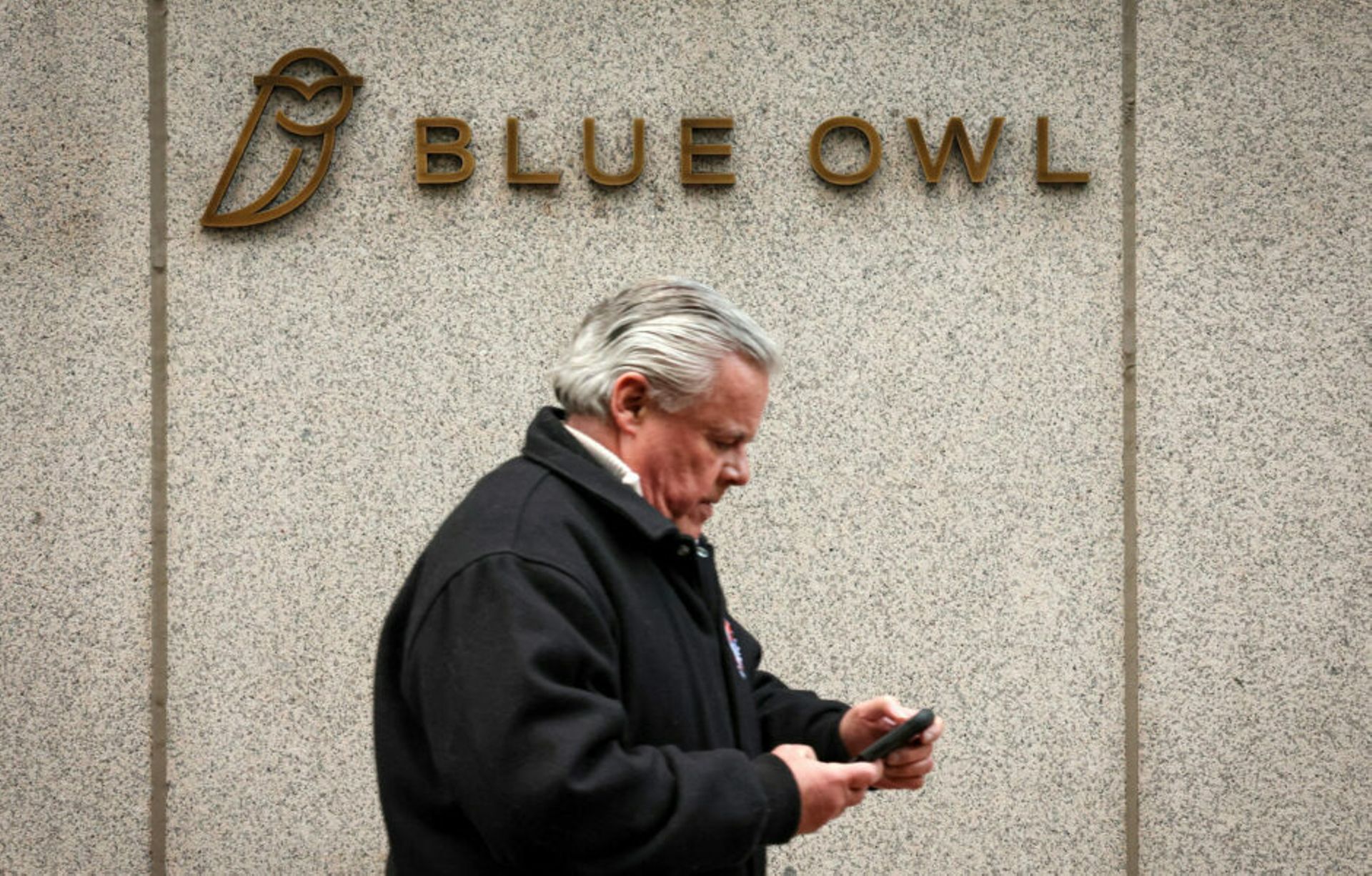
FILE PHOTO: A man walks past a logo for Blue Owl Capital on a midtown Manhattan office building in New York City, U.S., February 24, 2026. REUTERS/Brendan McDermid/File Photo

Blue Owl Capital has kept the withdrawal limit for two of its private credit funds at 5% of shares, even as redemption requests at both dropped sequentially in the second quarter, according to shareholder letters released on Thursday.

The New York-based firm said investors sought to withdraw $4.7 billion from the two funds in the second quarter, compared with $5.4 billion in the prior quarter.

Wealthy investors have pulled billions of dollars out of such non-traded private credit vehicles in recent months over worries about lending standards, and fears of AI-driven disruption at software companies that have borrowed from direct lenders.

While market participants expect withdrawal requests to remain above 5% for a few more quarters, some Wall Street analysts say underlying redemption trends suggest the second quarter may mark the peak.

Withdrawal requests at the $4.9-billion technology-focused Blue Owl Technology Income Corp (OTIC) fund fell to 38.1% in the second quarter from 40.7% in the prior quarter.

The flagship $33.8-billion Blue Owl Credit Income Corp (OCIC) fund saw redemption requests fall to 18.8% in the quarter from 21.9% in the previous quarter.

Blue Owl’s OCIC, the second-largest non-traded business development company, saw modestly lower tender requests broadly across channels and geographies.

Roughly 90% of investors remained invested in OCIC, the fund said, adding that the shareholder base that sought redemptions remained largely unchanged, with limited new participation.

“We believe OCIC’s strong performance over the past three months has reflected the quality of portfolio fundamentals and contributed to improved investor sentiment,” Blue Owl’s Craig Packer and Logan Nicholson said in the shareholder letter.

Non-traded BDCs give investors access to private credit assets and typically offer liquidity through quarterly tender offers of up to 5% of shares.

OTIC redemption requests remain above industry levels

Blue Owl has become emblematic of the redemption pressures facing private credit funds.

Tender levels at OTIC have remained well above the broader industry, which Blue Owl attributed to the fund’s concentrated shareholder base and specialized investment mandate.

While the bulk of Blue Owl’s wealth products are U.S. focused, the smaller OTIC fund has concentration in Asia, executives have said.

At 38.1%, OTIC’s repurchase requests were much higher than the 9% to 17% seen at the largest non-traded BDC managers that have reported second-quarter tender offer results.

Oaktree and Goldman Sachs were among the funds that bucked the broader trend in the second quarter, posting lower repurchase requests.

Blue Owl, which was formed from a 2021 merger between Owl Rock Partners and the Dyal ​Capital division of Neuberger Berman, currently manages five BDCs across its strategies. It had $315 billion in assets under management as of March 31.

The firm had decided to merge two of its private credit funds late last year, but later abandoned the plan as it stoked anxiety around private ⁠credit and the company’s stock tumbled.

Blue Owl shares have plunged roughly 56% over the past 12 months.

Reuters

Bring stories like this into your inbox every day.

Sign up for our newsletter - The Daily Brief
Subscribe to Newsletter


This is your last free story for the month. Register to continue reading our content