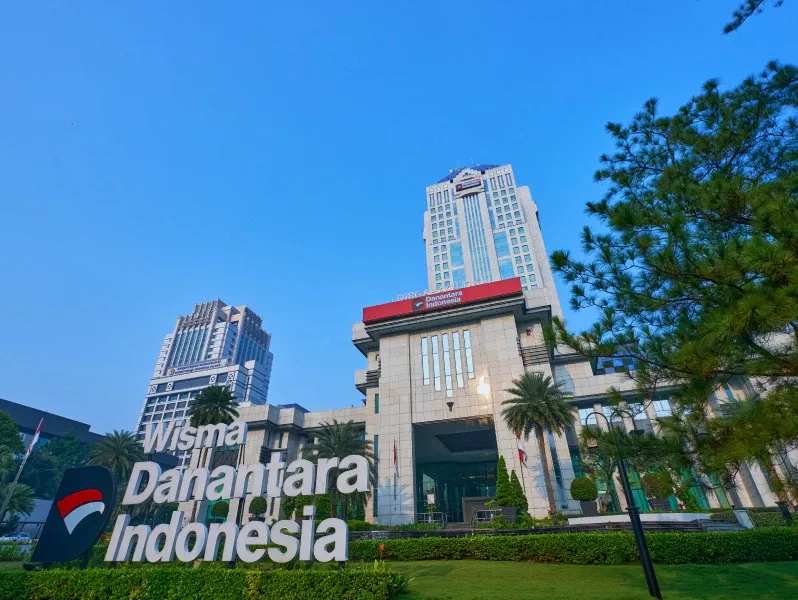
Danantara Sumberdaya Indonesia (DSI), the state-owned company tasked with overseeing Indonesia’s strategic commodity exports, is preparing to launch its National Data & Intelligence (NADI) portal on January 1, 2027.
DSI has yet to determine the final fee structure [for the platform service], according to CEO Luke Thomas Mahony. The company is still evaluating the proposal with the government and shareholders. It expects to announce the fee in December.
The announcement comes amid speculation over a proposed 0.5% charge on commodity exports, which has raised concerns among exporters. DSI has not confirmed the figure.
“We are not releasing the service fee at this point,” Mahony said at a press conference in Jakarta on Friday, adding that a wide range of figures circulating in the market had made it difficult for exporters to plan.
DSI is a subsidiary of Indonesia’s sovereign wealth fund Danantara Indonesia. It began operating on June 1, 2026, under Government Regulation No. 24 of 2026, which designates the company as the sole intermediary for exports of coal, palm oil and ferroalloys.
The policy is intended to strengthen oversight of strategic commodity exports, particularly by addressing under-invoicing, transfer pricing and potential leakage of export proceeds.
DSI’s role is to monitor export transactions and documentation, rather than take over exporters’ commercial activities. Exporters will continue to negotiate prices, sign contracts and arrange shipments directly with buyers.
The government has said the framework is also intended to strengthen the management of export proceeds and increase Indonesia’s bargaining power in international commodity trade.
The service fee has emerged as a key issue in discussions between DSI and industry associations, with exporters seeking clarity on the amount and payment mechanism.
Mahony said the company was reviewing feedback from industry groups as it worked to finalise the fee structure, including the costs and benefits of its services.
DSI’s service fees will be set in accordance with regulation, which provides for reasonable margins in the company’s operations.
NADI implementation
Under the new system, exporters will register through the NADI portal and upload commercial documents, including export contracts and draft export declarations, known as Pemberitahuan Ekspor Barang (PEB).
DSI will then forward the relevant data to the Indonesia National Single Window system, which is connected to the Directorate General of Customs and Excise.
The platform is designed to integrate export documentation and improve transaction monitoring, with DSI using data analytics to identify inconsistencies in export transactions.
The system has undergone two rounds of pilot testing involving exporters from the three commodity groups.
Around 110 exporters have participated, representing approximately 77% of the export value recorded in export declarations for the commodities covered, according to DSI’s director of finance and treasury, Sinthya Roesly. More than 500 export contracts have been uploaded during the trials.
The latest round of testing took place on November 25, with DSI working alongside industry associations including the Indonesian Coal Mining Association (APBI), the Indonesian Mining Association (ICMA) and the Indonesian Palm Oil Association (GAPKI).
Roesly said exporters had been cooperative in testing the platform and providing feedback ahead of its implementation.
Exporter registration is scheduled to open on December 15, ahead of the January 1 launch.
DSI is also preparing technical support for exporters and customs brokers across six export hubs: Dumai, Medan/Belawan, Palembang, Banjarmasin, Samarinda and Kendari. The company said it would continue engaging with industry associations as it refined its business model and services ahead of the NADI launch.
Coal, palm oil and ferroalloys generated $66.1 billion in combined export revenue in 2025, accounting for 23.4% of Indonesia’s total exports, according to DSI.