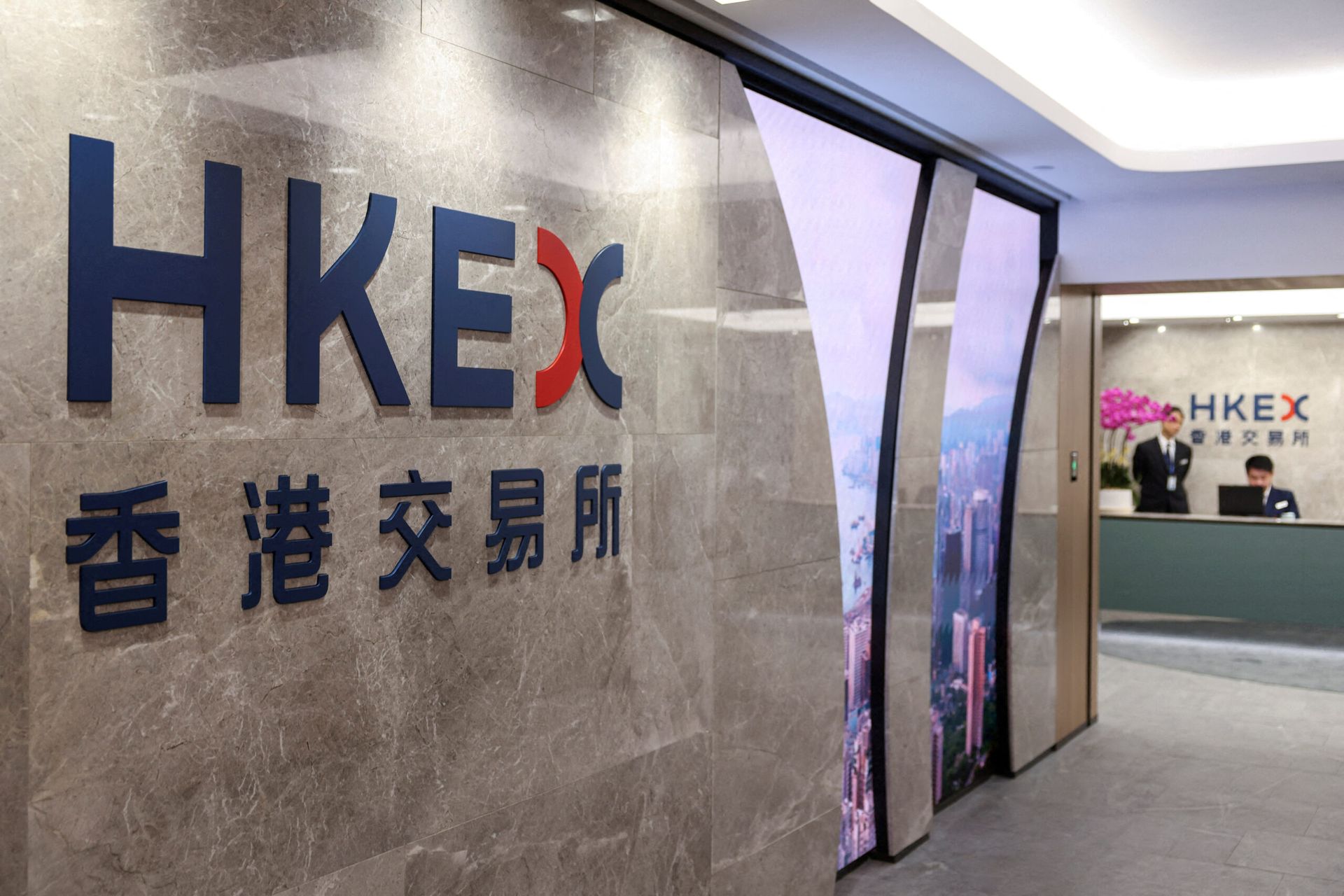
Hong Kong‘s stock exchange on Friday made it easier for companies to go public in the Asian financial hub, lowering thresholds for firms with dual-class share structures and broadening access to confidential IPO filings.
The reforms, which take effect immediately, follow a market consultation that received 73 responses and drew strong support from investors, issuers and market participants, the Stock Exchange of Hong Kong Limited, a unit of Hong Kong Exchanges and Clearing (HKEX), said.
They are part of a wider push by Hong Kong to strengthen its position as a fundraising hub and come a day after it signed an agreement with Malaysia to facilitate dual IPO listings and cross-listing of investment products.
Among the key changes, the exchange halved the minimum market capitalization threshold for companies, including overseas-listed firms, with weighted voting rights (WVR), or dual-class share structures, to HK$20 billion ($2.55 billion) from HK$40 billion.
It also reduced the threshold for non-WVR overseas-listed companies to HK$6 billion from HK$10 billion.
Companies with a market value of at least HK$6 billion can also qualify if they generate at least HK$600 million in annual revenue, down from previous thresholds of HK$10 billion and HK$1 billion, respectively.
A dual-class share structure gives founders extra voting power, allowing them to maintain high levels of control despite smaller stakes.
HKEX will also extend the option of confidential filing for IPO applications to all new applicants, rather than limiting it mainly to secondary listings, biotech firms and specialist technology companies.
New Hong Kong listings have raised $33.8 billion this year, the highest for the same period since 2021 and more than double the $16.4 billion raised a year earlier, LSEG data as of July 21 showed.
Reuters