Focus on operational execution to sustain profitability: GoTo CEO

Focus on operational execution to sustain profitability: GoTo CEO

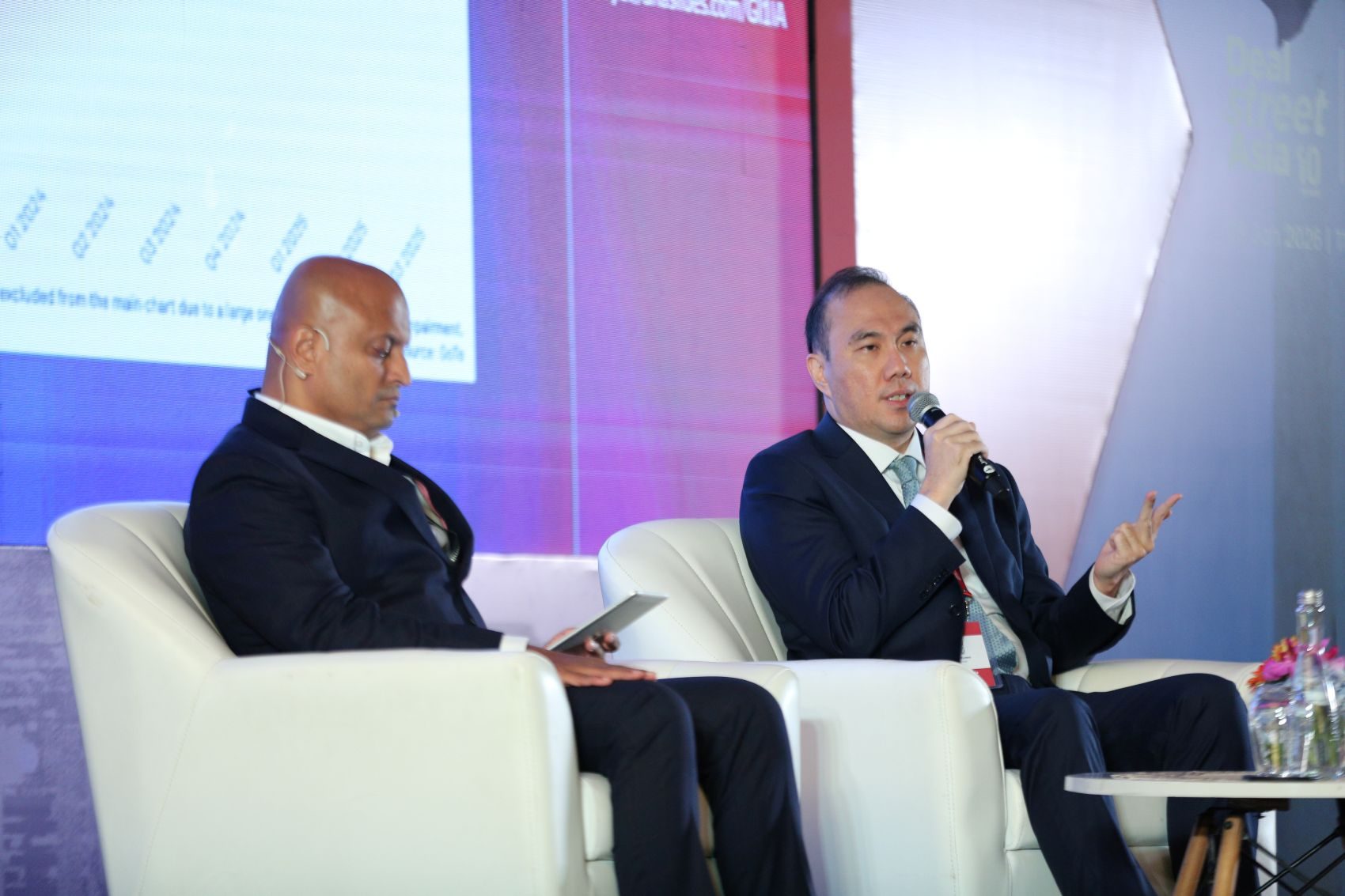
GoTo Group's CEO Hans Patuwo and Joji Thomas Phillip, Founder & Editor-in-chief, DealStreetAsia, at a fireside chat at the Indonesia PE-VC Summit in Jakarta on Jan. 29, 2026.

GoTo Group is tightening its strategic focus on customer segmentation and operational execution as the Indonesia-listed technology group seeks to sustain recent gains in profitability, chief executive officer Hans Patuwo said at DealStreetAsia’s Indonesia PE-VC Summit 2026 on Thursday.

The company’s annual transacting customers rose by about 33% to 61.1 million in Q3 2025, while core gross transaction value increased roughly 40%. Adjusted EBITDA climbed around 239%, and the group has turned free cashflow positive. GoTo has raised its full-year 2025 adjusted EBITDA guidance to between 1.8 trillion rupiah and 1.9 trillion rupiah. The Q4 numbers, meanwhile, are expected around March.

In his first public conversation since taking over the new role, Patuwo cautioned that the improvement does not mean the company’s restructuring work is complete, but said the group is now placing greater emphasis on execution and internal performance indicators rather than external market narratives.

He said the management is focusing on what it can control and on distinguishing operational “signal” from market “noise”.

A central element of GoTo’s current strategy is a more explicit segmentation of its user base. Patuwo said the company is no longer approaching consumers as a single group, but instead differentiating between affluent users who prioritise speed and convenience; mass-market users who are more sensitive to pricing; and drivers, whom he described as a core customer group alongside consumers.

He said consumer behaviour has become more fragmented over the past one to two years, making broad-based offerings less effective. As a result, GoTo is increasingly tailoring products and services to specific customer segments, despite the added complexity this creates for operations.

Drivers remain a key consideration as the company balances margins, regulation, and platform sustainability. Patuwo said discussions around driver protection should start with an understanding of the wide variation in how drivers use the platform, noting that some are active only a few hours a month while others work close to full-time.

Rather than uniform benefit structures, GoTo is considering more differentiated approaches, including tiered benefits and incentives linked to activity and performance. Patuwo also pointed to periods of driver idle time during the day as an area where better utilisation could increase driver income while meeting customer demand.

He said the company does not view driver welfare as separate from commercial considerations, arguing that any approach must be financially sustainable for the platform while remaining viable for drivers and affordable for consumers.

Focus on governance

Addressing growth prospects, Patuwo said the period of heavy subsidies in on-demand services has largely ended.

He said GoTo has focused on improving margins and reducing inefficiencies while continuing to invest selectively in engineering, data science, and personalisation capabilities to support future growth without returning to aggressive incentive-driven strategies.

Fintech is increasingly contributing to the group’s performance, though Patuwo framed it as a developing rather than fully mature engine.

He said loan growth rose about 70% year on year, while risk performance has remained stable. Payments and transfers continue to serve as the main entry point for users, with data supporting lending decisions and monetisation.

While lending has been the most effective monetisation lever so far, Patuwo said the company is beginning to look at longer-term opportunities in areas such as investments and insurance. He stressed, however, that growth in these areas would be approached cautiously, with attention to fraud controls, trust, and credit cycles.

From an investor perspective, Patuwo said the company’s focus is on becoming more consistent and predictable in both execution and communication. He acknowledged that investor sentiment towards technology companies remains uneven but said that GoTo’s approach is to concentrate on operational metrics and maintain strategic consistency rather than respond to short-term market movements.

Governance has taken on greater importance following GoTo’s transition to a public company. Patuwo said the management has adopted a stricter approach to compliance and internal controls and is working closely with regulators to strengthen governance standards. He said the objective is to build an organisation capable of operating sustainably over the long term.

Patuwo also mentioned the company’s use of artificial intelligence: GoTo is not developing proprietary large language models but is applying open-source models through inference and combining them with internal data.

He said machine learning already plays a role in areas such as credit scoring, driver allocation, and operational efficiency, with current efforts focused on improving speed and cost efficiency rather than direct monetisation.

Looking ahead, Patuwo said Indonesia remains relatively underpenetrated across on-demand services, payments, and lending compared with other Asian markets. He added that future growth will depend on the company’s ability to balance consumer demand, partner economics, and operational sustainability while continuing to refine its technical capabilities.

Edited by: Joymitra Rai

Bring stories like this into your inbox every day.

Sign up for our newsletter - The Daily Brief
Subscribe to Newsletter


This is your last free story for the month. Register to continue reading our content