(The author, Jamaludin Bujang is Managing Partner at Gobi Partners. He joined Gobi in 2019 after serving as CEO of MAVCAP and now oversees investment activities in its Kuala Lumpur office, including in the semiconductor and deeptech sectors.)
Over the past half-century, Malaysia has become one of the largest semiconductor exporters in the world. Known primarily for backend processes, it’s now pursuing an ambitious plan to stake its claim in higher-value segments like IC design and advanced manufacturing for applications like AI and 5G.
As Malaysia’s semiconductor industry moves upstream, the benefits for the country—which launched the National Semiconductor Strategy in 2024 to advance its global position—are obvious. But they extend beyond Malaysia to the rest of the region.
Malaysia has the potential to spearhead Southeast Asia’s emergence as one of the world’s most important semiconductor hubs by making the regional supply chain stronger.
Its evolution gives other countries opportunities to develop capabilities that complement one another. For example, Singapore can expand its wafer fabrication capabilities, Thailand can grow its power electronics and automotive semiconductor sectors, and Vietnam can scale assembly, testing, and packaging.
Combined, this creates an ecosystem that helps the region be increasingly competitive against East Asian hubs in Taiwan, South Korea, and China while drawing in more foreign investors.
Growth of Malaysia’s semiconductor industry
Malaysia’s semiconductor industry is already a formidable global force, built on five decades of expertise. It originated when Intel, AMD, and other international tech giants set up backend manufacturing in Penang.
Now, Malaysia accounts for 13% of the global outsourced assembly and testing (OSAT) market and employs over 600,000 engineers and technicians. Malaysia is already the world’s sixth-largest semiconductor exporter.
Branching into higher-value segments entails moving from APT (assembly, packaging, and testing) toward processes like integrated circuit design and proprietary IP. That is one of the main goals of the ambitious National Semiconductor Strategy. The framework was designed to increase Malaysia’s resilience amid continuing geopolitical and economic shifts and aims to position the country’s semiconductor industry as an irreplaceable part of the global supply chain.
Malaysia already has many unique advantages that put it in a strong position to be the centre of a Southeast Asian semiconductor hub. Its geographical location and political neutrality enable it to serve as a bridge between the East and West.
The National Semiconductor Strategy is strategically leveraging geopolitical changes. These include the US-China tensions that prompted multinational companies to decouple their supply chains from China and start investing in more neutral countries like Malaysia.
The National Semiconductor Strategy is also seizing the opportunity to move the industry toward IC design and R&D, advanced packaging, and the production of higher-value intellectual property. Building expertise in these areas gives Malaysia an opportunity to move away from its current status as a manufacturing base and position itself as a strategic innovation partner.
This gives local and foreign firms the incentive to locate design centres, research and development partnerships, and talent development programmes in the country.
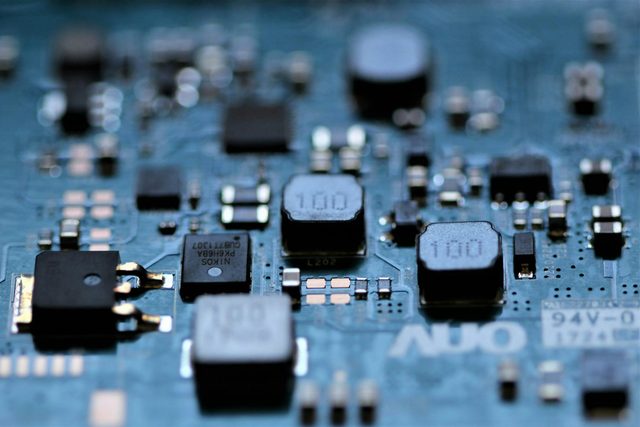
The centre of SE Asian semiconductor hub
If Malaysia succeeds, it has the potential to empower the entire region. For example, it can reduce Southeast Asia’s reliance on East Asian semiconductor hubs by moving into design and advanced packaging. This creates a more integrated supply chain with neighbours like Singapore, Thailand, Vietnam, Indonesia, and the Philippines.
ASEAN countries are already taking steps toward building a stronger ecosystem. For example, the ASEAN Framework for Integrated Semiconductor Supply Chains (AFISS) is a strategic initiative that aims to position the region as a major hub as global supply chains continue to shift. As Malaysia moves into higher-value activities, it can help create more opportunities for knowledge-sharing, research and development collaborations, and cross-border talent flow.
Furthermore, as Malaysia establishes itself as a centre for higher-value operations, Southeast Asia has the opportunity to draw in more foreign direct investment and multinationals pursuing “friendshoring” amid the US-China decoupling.
Challenges to overcome
Malaysia is well-situated to boost the international power of its semiconductor industry. But there are some challenges it needs to overcome.
Under the National Semiconductor Strategy, Malaysia is targeting investment of 500 billion ringgit ($122 billion) into the industry by 2030. As of March 2025, Malaysia had secured over 63 billion ringgit from domestic and foreign sources.
Under the National Semiconductor Strategy, Malaysia is targeting investment of $122b by 2030.
But despite government support of at least 25 billion ringgit, Malaysia needs to raise significantly more capital to fund the IP, design houses, and advanced packaging infrastructure it is betting on for the future.
Another challenge is the shortage of semiconductor engineers. The National Semiconductor Strategy aims to train and upskill 60,000 engineers by 2030, but it has acknowledged that the current talent pool is too small, partly because of “brain drain” as engineers leave the country for higher salaries elsewhere.
Other Southeast Asian countries are also aiming to grab a bigger share of the semiconductor market as the decoupling continues. The most formidable player in the region in Singapore, which holds about 10% of the global semiconductor market and is a major hub for wafer fabrication. It has the potential to become a stronger design and front-end hub, potentially competing with Malaysia. While smaller in scale, Vietnam and Thailand are both growing their assembly, test, and packaging capacity, laying the groundwork to become stronger rivals.
Malaysia’s strengths and momentum
Despite these challenges, Malaysia’s momentum is accelerating. While more funding is needed, foreign direct investment trends over the past few years are favourable for the semiconductor industry. For example, Penang attracted a record $12.8 billion in FDI in 2023–more than the previous seven years combined. Multinationals that have invested in Penang include Intel, Infineon Technologies, Lam Research, and Micron Technology, underscoring international confidence in the long-term growth of Malaysia’s semiconductor industry.
The National Semiconductor Strategy is also laying the infrastructure for new public-private partnerships and venture funding. For investors betting on Malaysia’s semiconductor industry, it currently offers attractive valuations and long-term upside that will continue as IP creation accelerates.
Talent is as foundational to the industry as capital is and Malaysia is actively building a pipeline to address the current shortage. While brain drain is a challenge, the National Semiconductor Strategy’s goal of adding 60,000 to the semiconductor workforce by 2030 is gaining steam. As of this month, it has already trained 13,679 engineers and skilled workers.
The National Semiconductor Strategy has already trained 13,679 engineers.
Along with its ability to attract investors and a growing talent pool, Malaysia’s advantage against other countries is its half-century of experience building a world-class semiconductor industry. This gives it a significant competitive moat against other markets that are newer entrants.
If the National Semiconductor Strategy works, Malaysia will become a global hub for semiconductor research and development. This further cements its leadership in ASEAN’s semiconductor ecosystem while boosting other countries. With its unique blend of strengths, Malaysia is well-situated to anchor Asia’s next wave of chip design, IP, and packaging innovation.